Days 1 and 2: Travel and a Train Excursion
We moved our family vacation to Italy from May up to December since our oldest is getting a chance to study abroad in May. While it did add some stress to our holiday season, it was actually a great time to go to Italy.
We flew through Philadelphia from Ohio and had several hours to wait during our connection. We discovered Philly’s airport has a great USO and lots of great artwork throughout. (The Chick Fil A in the E terminal has a full menu, while all the others have a smaller menu.)
Our flight to Rome was just about full and they fed us dinner within an hour of takeoff. There was also a mid-flight snack offered and a small breakfast before landing. Snacks and some drinks were also available in the galley during most of the flight.
After landing in Rome, we had to go through customs and borders. It’s not just showing your passport anymore. We had to register on a machine that scanned our passports, took a photo and scanned our fingerprints on one hand. Then, we had to repeat that process through the main area to get our passport stamped. We weren’t asked any customs questions this time.
Once through, we got our suitcases and headed to our hotel. We stayed at a Hilton by the airport and there was a shuttle just outside the terminal that took us directly to the hotel – it came every 15 minutes.
Hilton Garden Inn Rome Airport is a very nice hotel with a great breakfast, nice staff, clean rooms and a good restaurant. However, it would have been more convenient to stay closer to Rome we realize now. We also had to take the shuttle to the airport every time we wanted to take a taxi as the taxis would drop off at the hotel but would only pick up at the airport.
FreeNow is the taxi app (like Lyft or Uber) in Italy and it was very easy to use. Rates are very clear and we easily found vehicles that would fit six people, although there is an extra fee if you have more than four people in Italy.
After getting settled in our hotel rooms, we did a small excursion and took the train to Termini Station to look around. We got dinner at the Eataly restaurant there since we’ve eaten at Eataly’s in Chicago and NYC. We were all ready for bed by the time we got back to the hotel.
(Day 1 is really two days in one as you lose 6 hours crossing the ocean. We left on a Monday and went to bed at the hotel on Tuesday night.)
Day 3: A Churches Tour
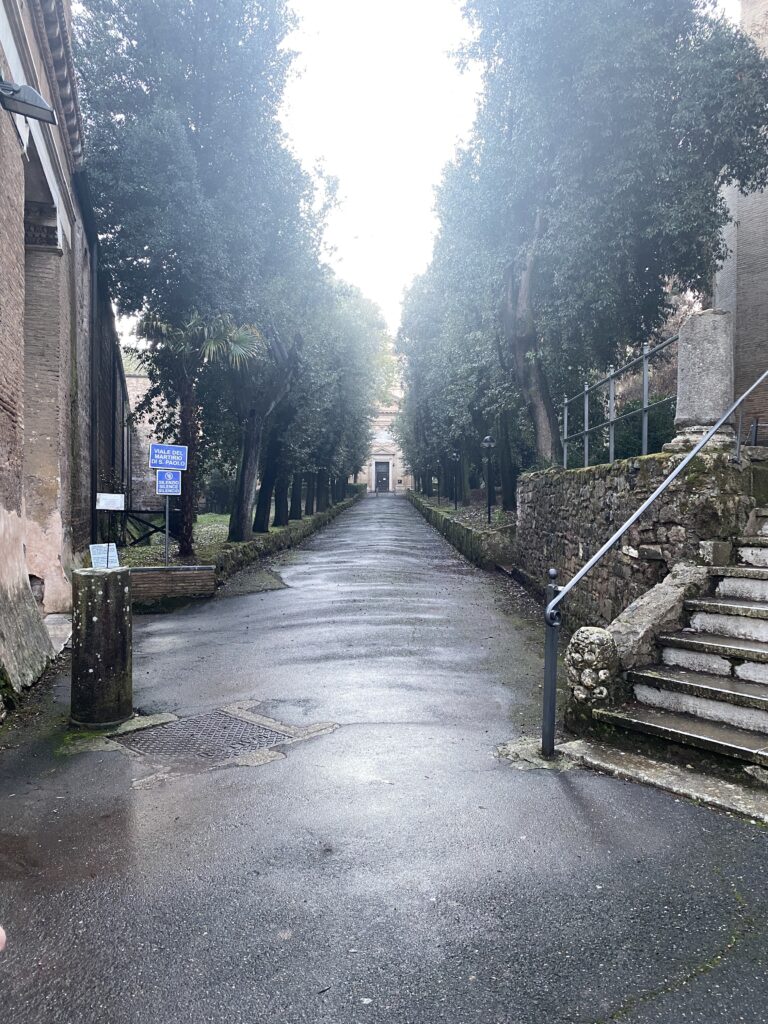
We had to wake up early to meet up with the former priest at our church who is now studying in Rome. He had a day off and could show us around.
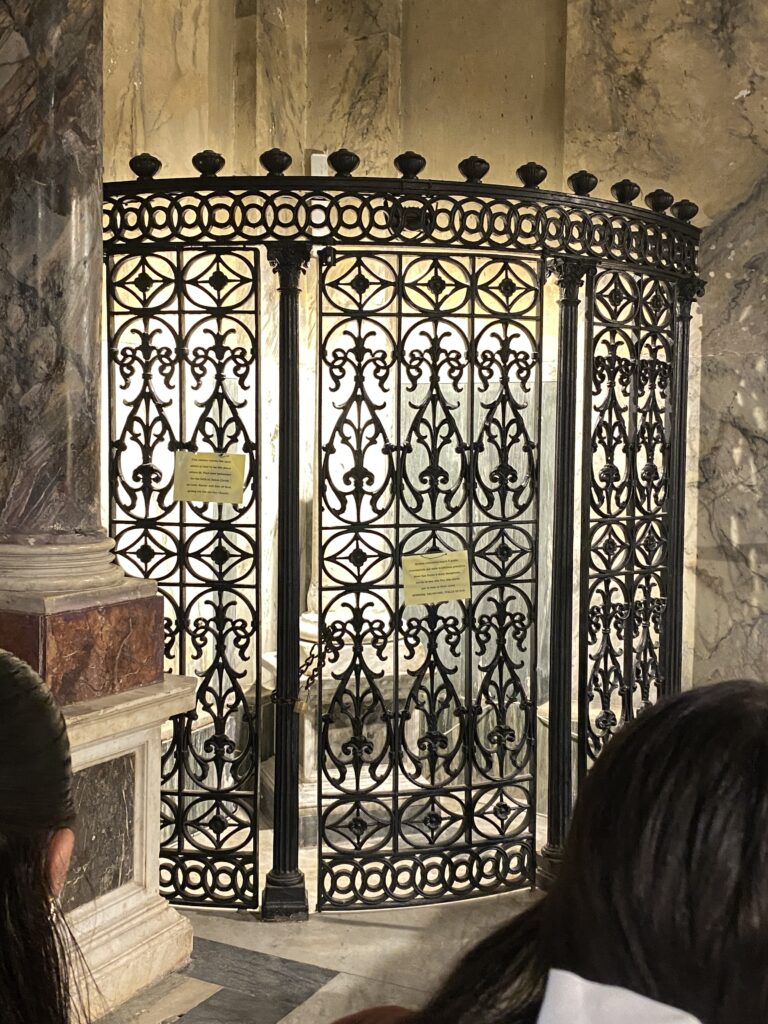
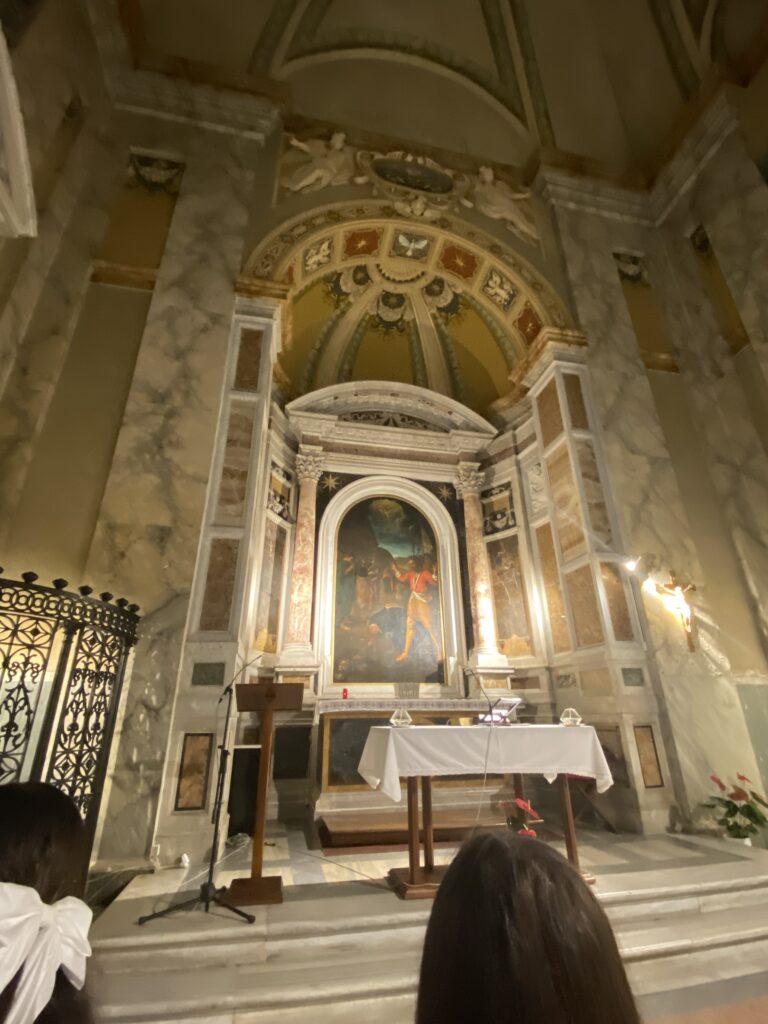
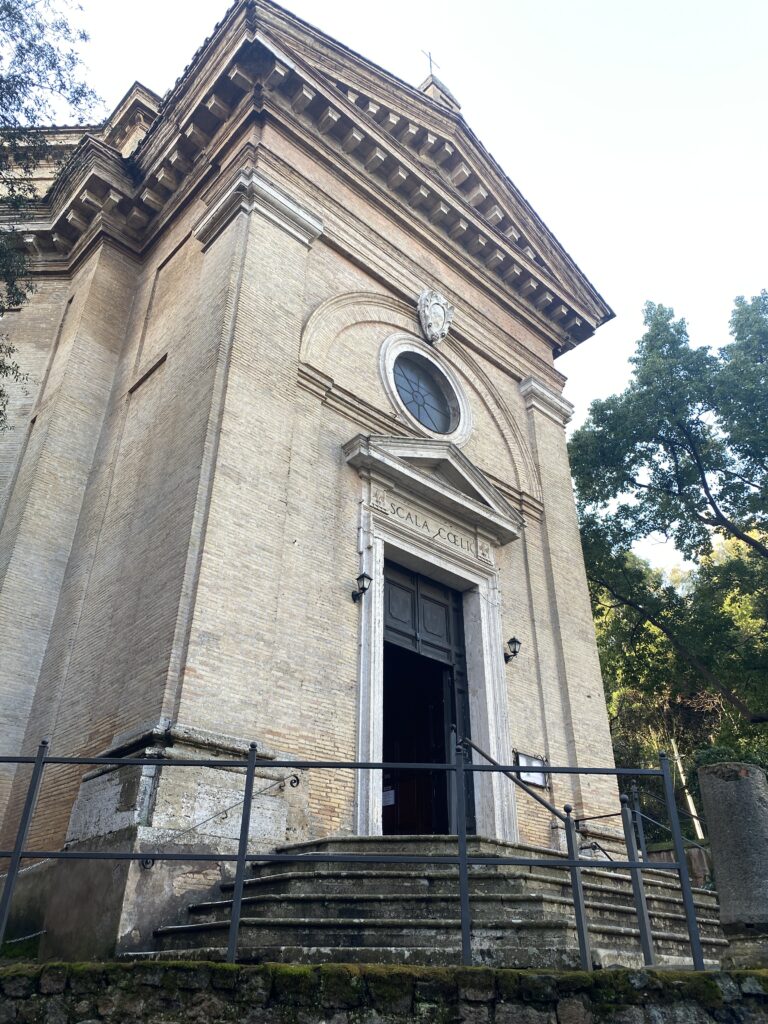
Our first stop was Tre Fontane. It’s the site where St. Paul was beheaded. The last prison cell he was in is also located there. Churches are built on both sites. The priest said mass with us at the church where Paul was killed and we also got to touch the pillar they used when they beheaded him. We got to walk on the path that Paul most likely walked along before he died. Before we left, we checked out the gift shop and café run by the monks and nuns there.
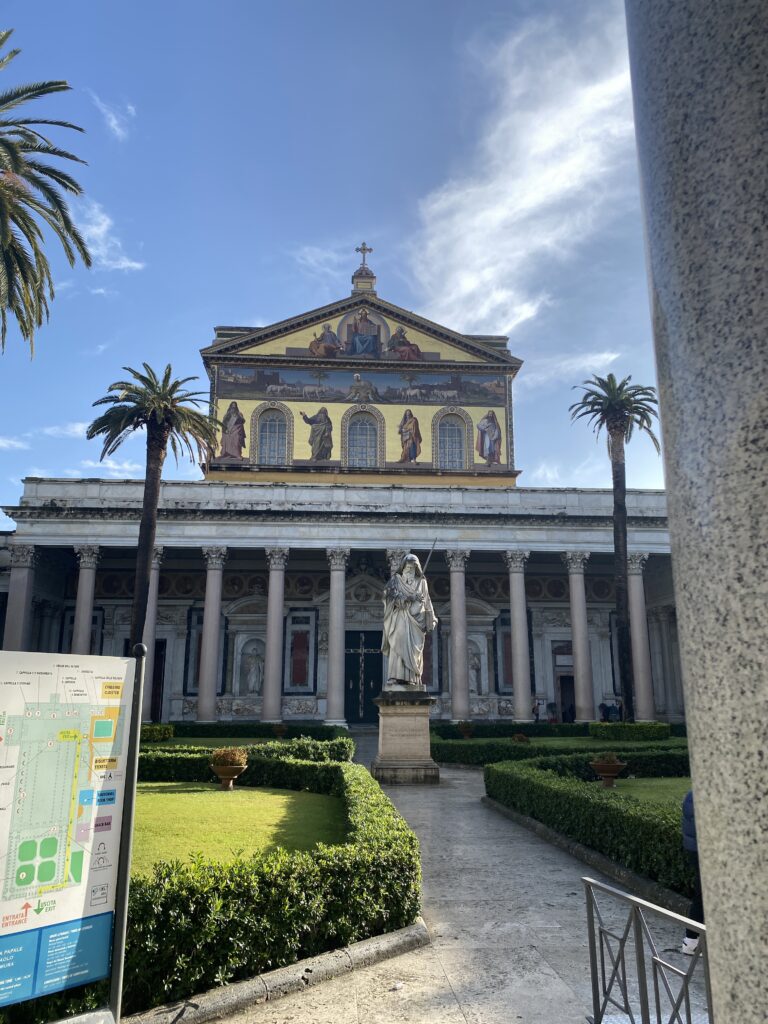
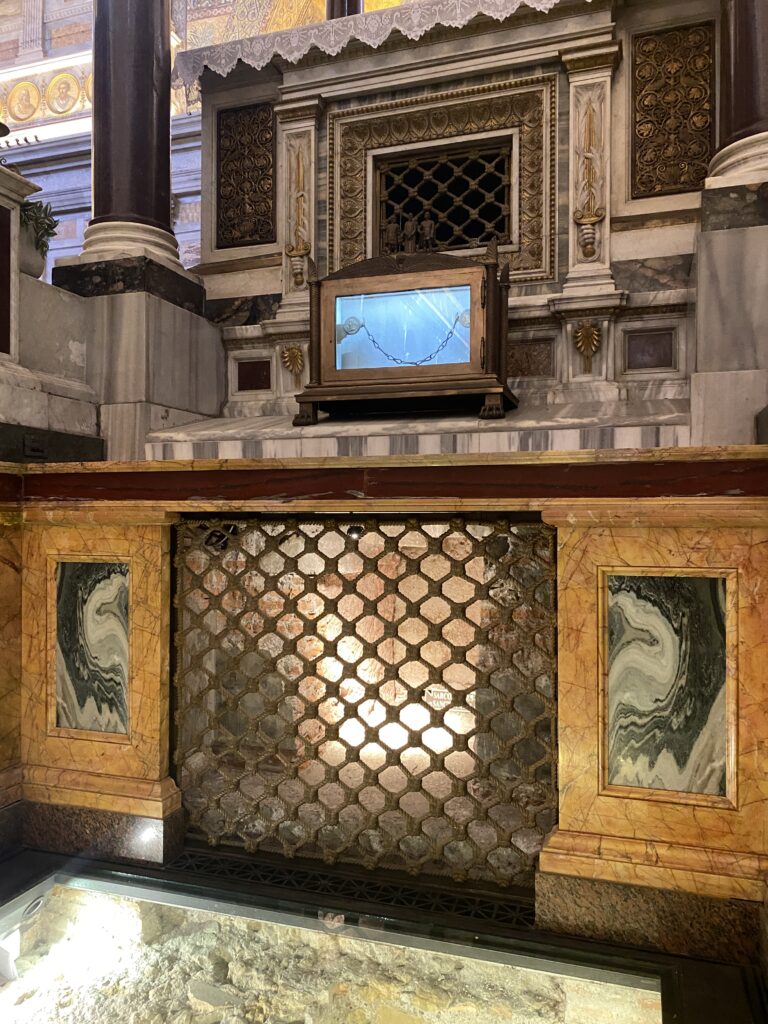
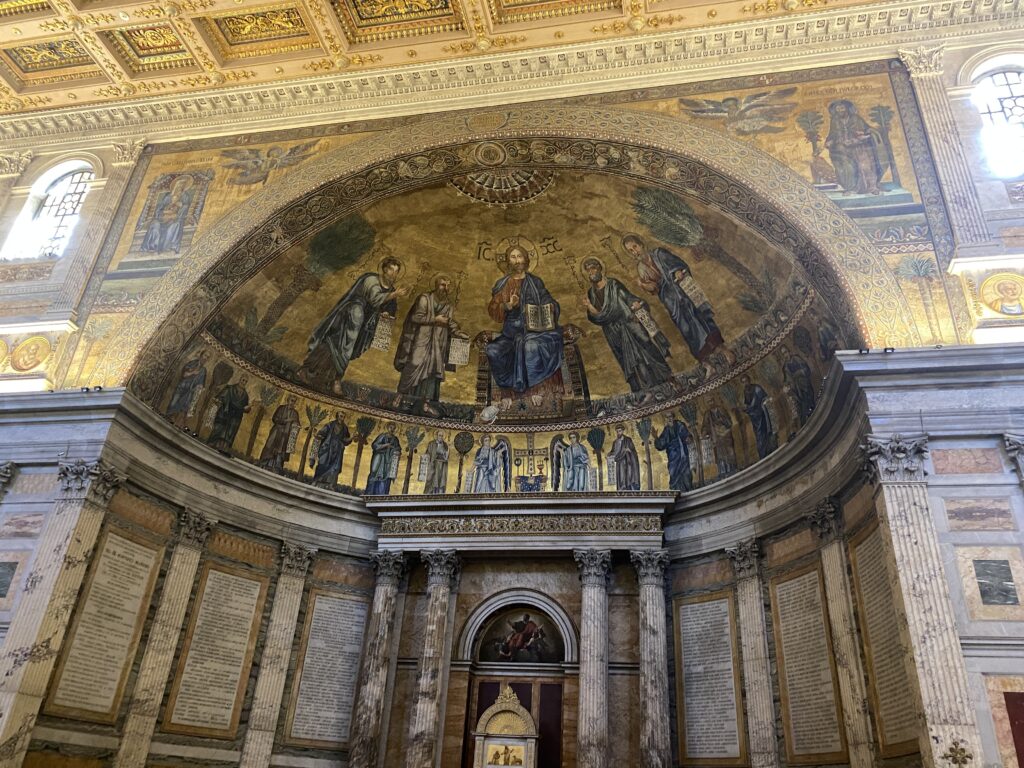
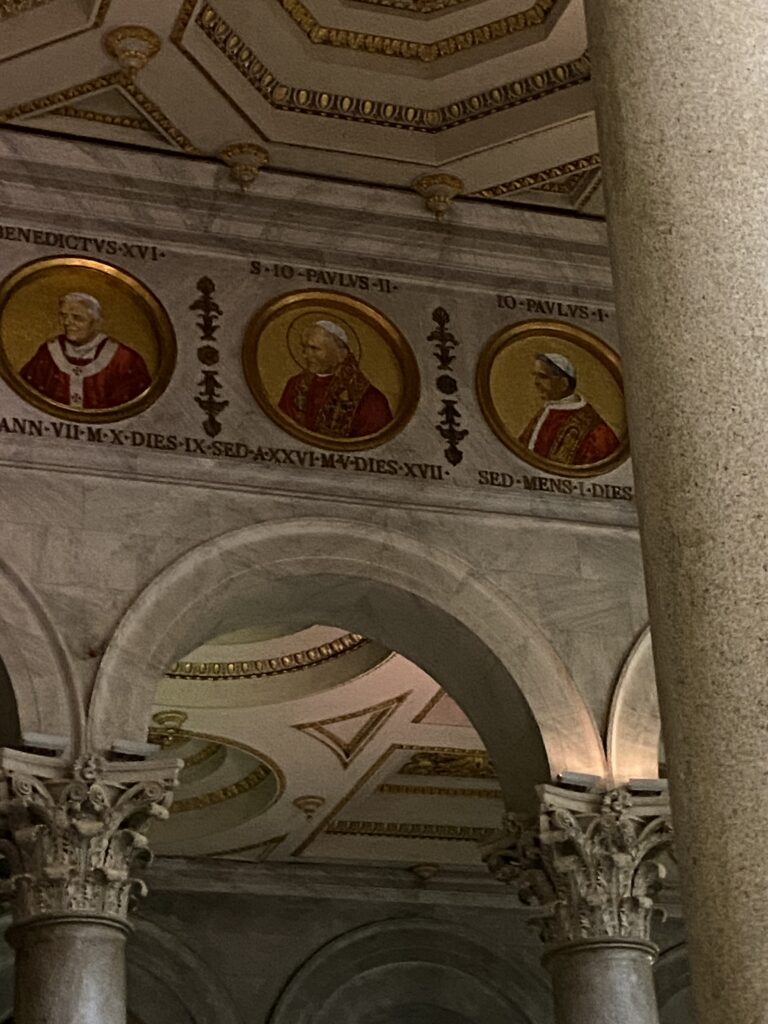
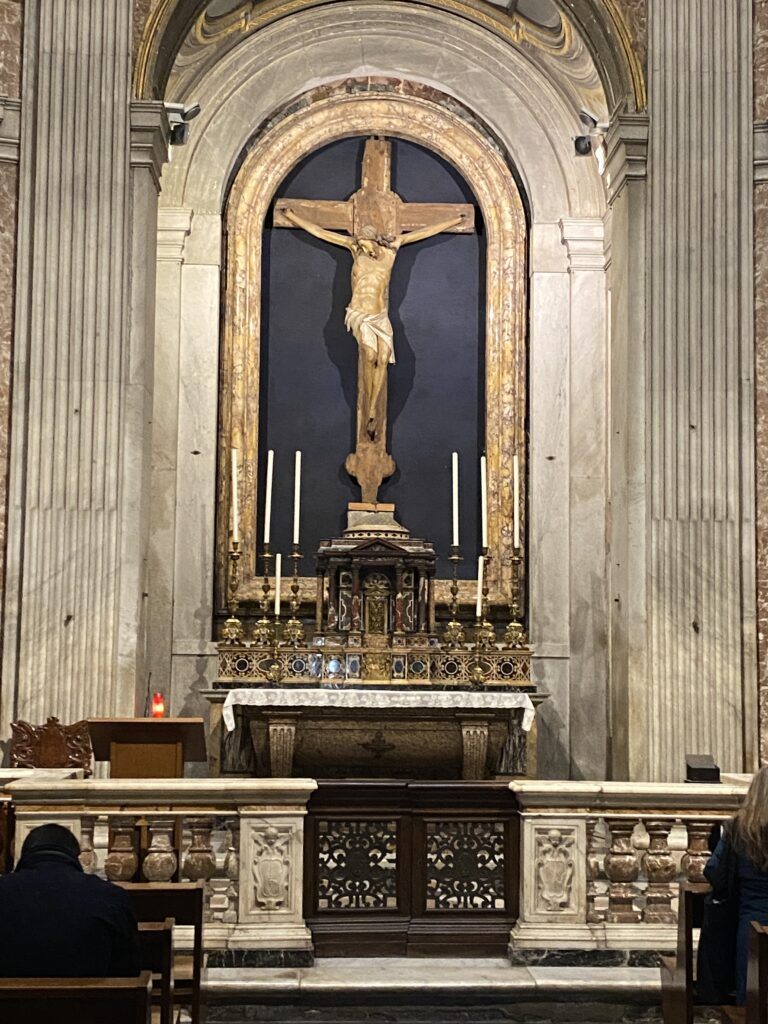
Next stop was St. Paul Outside the Walls. We were in Rome for the Jubilee Year and this church was one of the four that has holy doors open. This church is where St. Paul is buried. (They buried people outside of Rome’s city walls.) It also displays chains that held St. Paul. It also has pictures of all the popes painted along the ceiling. This church also has the crucifix that talked to St. Brigid. Jesus turned his head to where she was and the statue stayed that way.
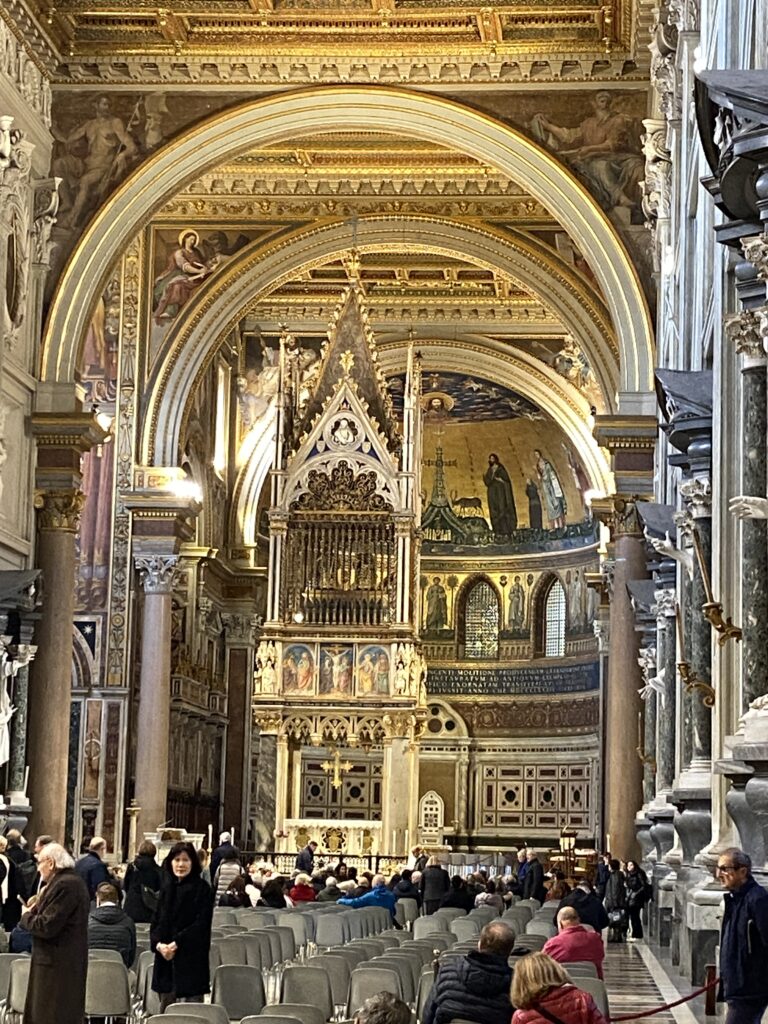
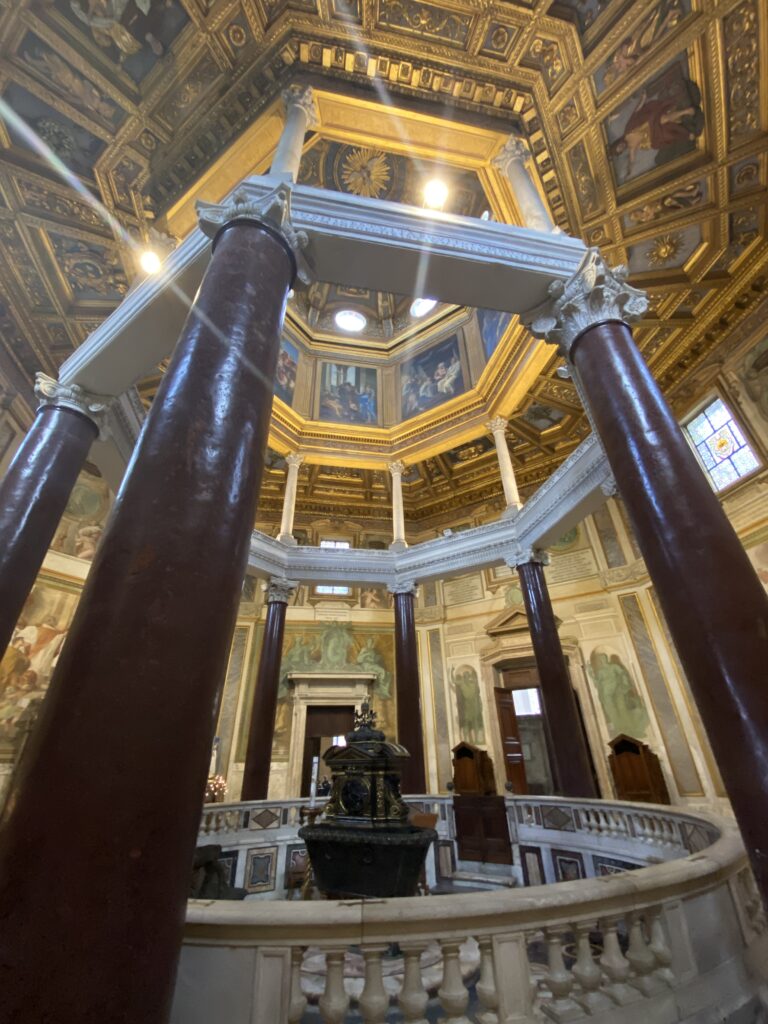
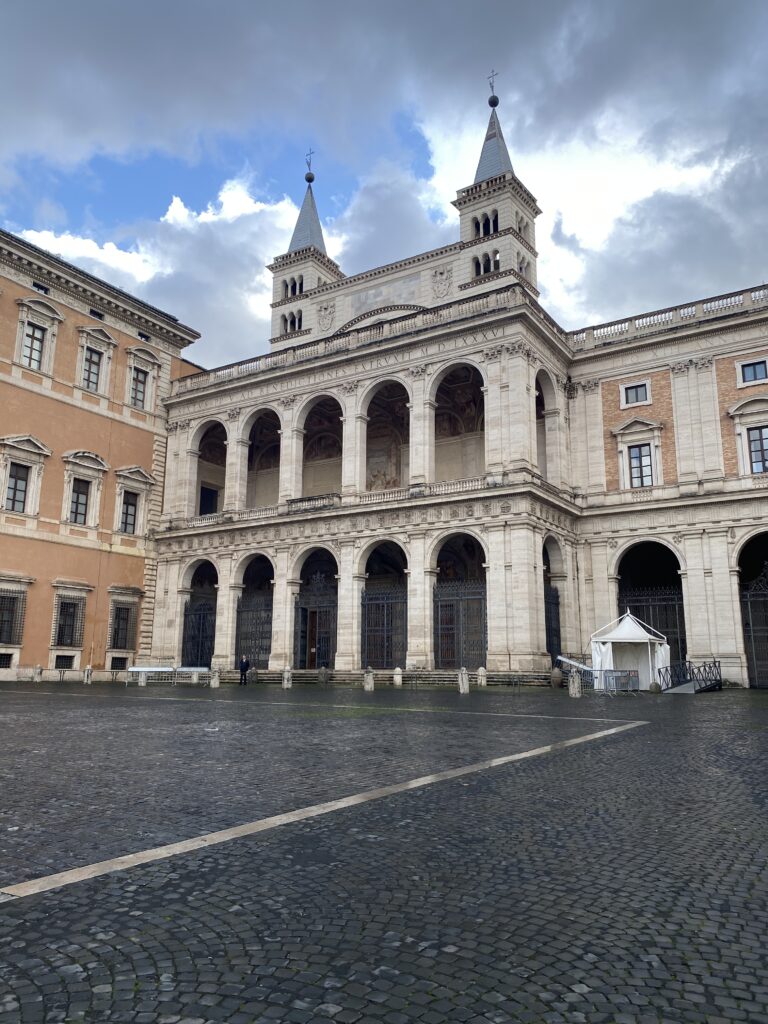
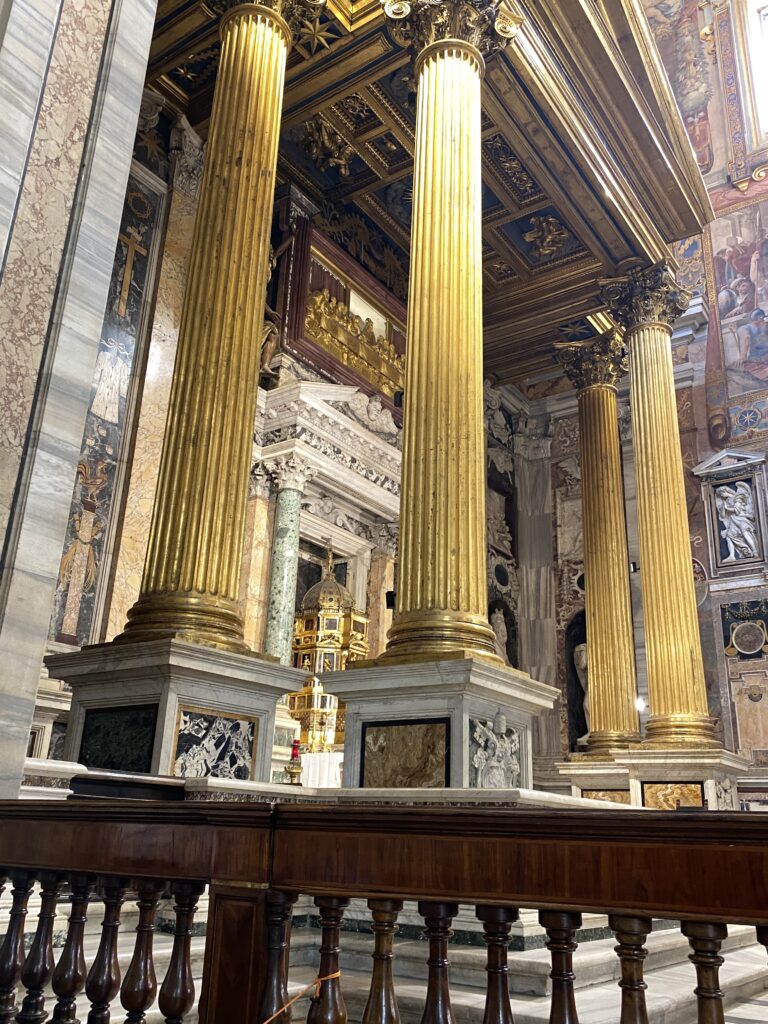
We then headed to St. John Lateran, which is Rome’s cathedral and has another one of the holy doors. Mass was going on, so we couldn’t get close to the altar. At the altar is a wooden altar that is said to have been used by St. Peter. St. Peter and St. Paul’s heads are there. There is also a piece of the table from the Last Supper. We also stopped in the baptisry, which dates back to the 300s!
Lunch that day only cost 10 Euros a person. We found a place where you could pick a pasta, a protein and a vegetable for that price. As with all the food in Italy, it was a great meal.
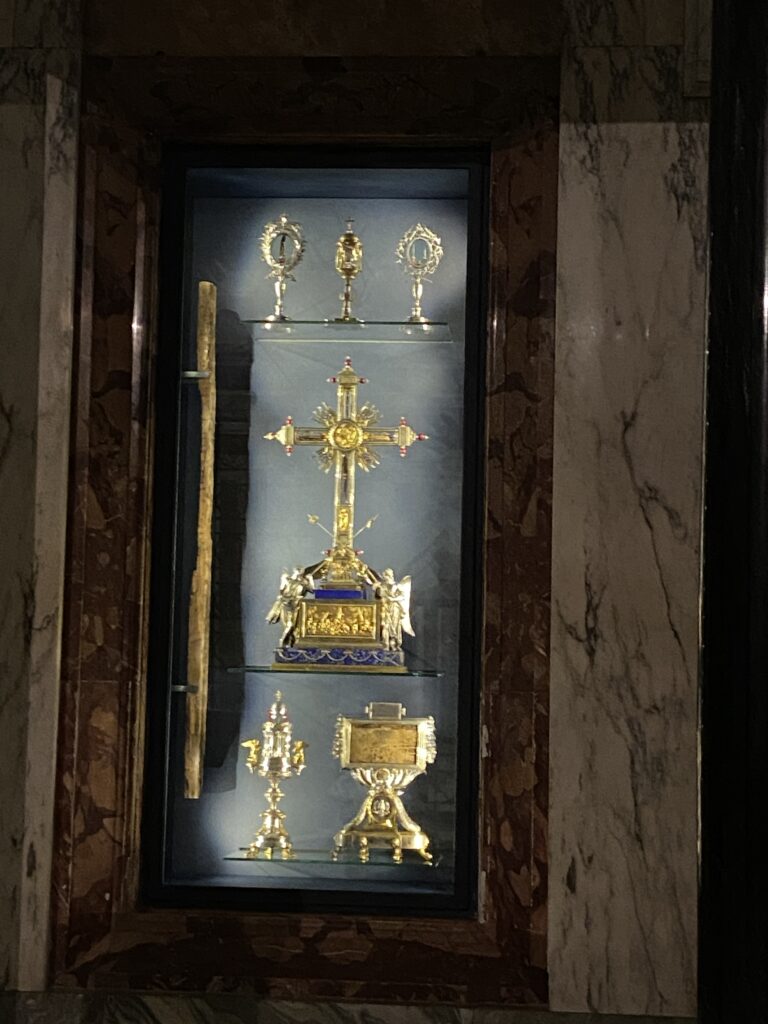
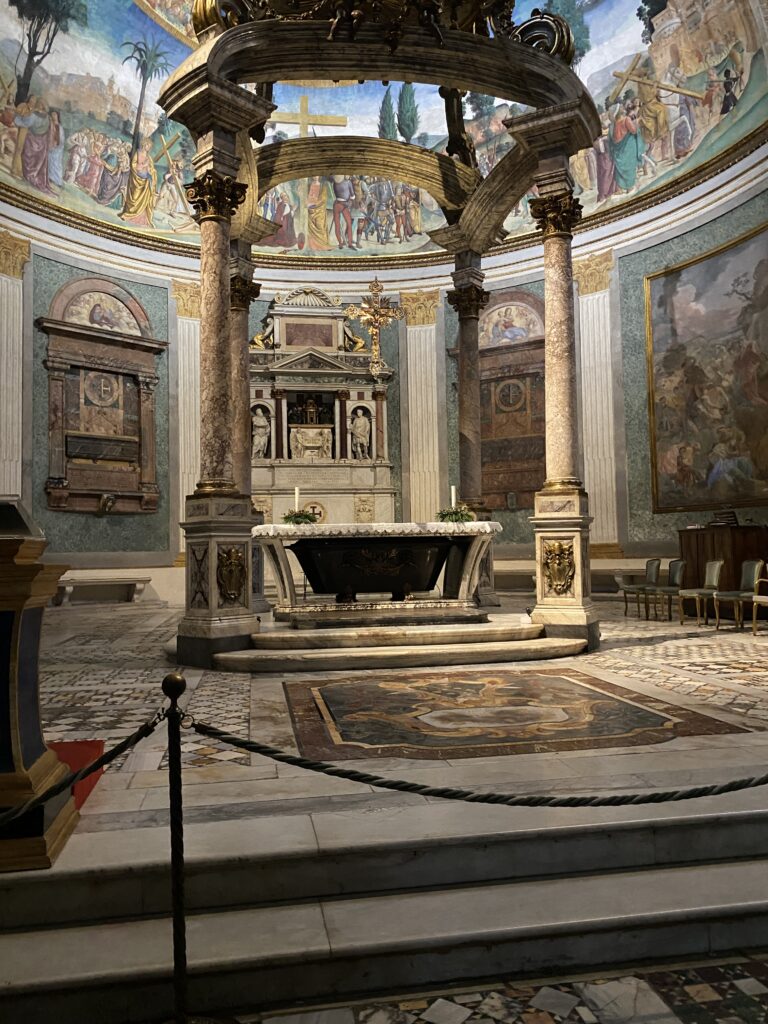
After lunch, half of our group visited the Santa Scala. It’s where St. Helena (Constantine’s mother) brought back the steps that Jesus walked up to Pontius Pilate. You go up the 28 steps on your knees while praying. (We had a person with a hurt knee in our group who couldn’t do it.) Then, we visited Santa Cruce in Gerusaleme, which is where the other relics St. Helena brought back are kept. These include a piece of the true cross, thorns from the crown of thorns and the sign put on top of the cross. We were stunned that there were so few people at this church to see these relics. They also have a replica of the Shroud of Turin that you can look closely at.
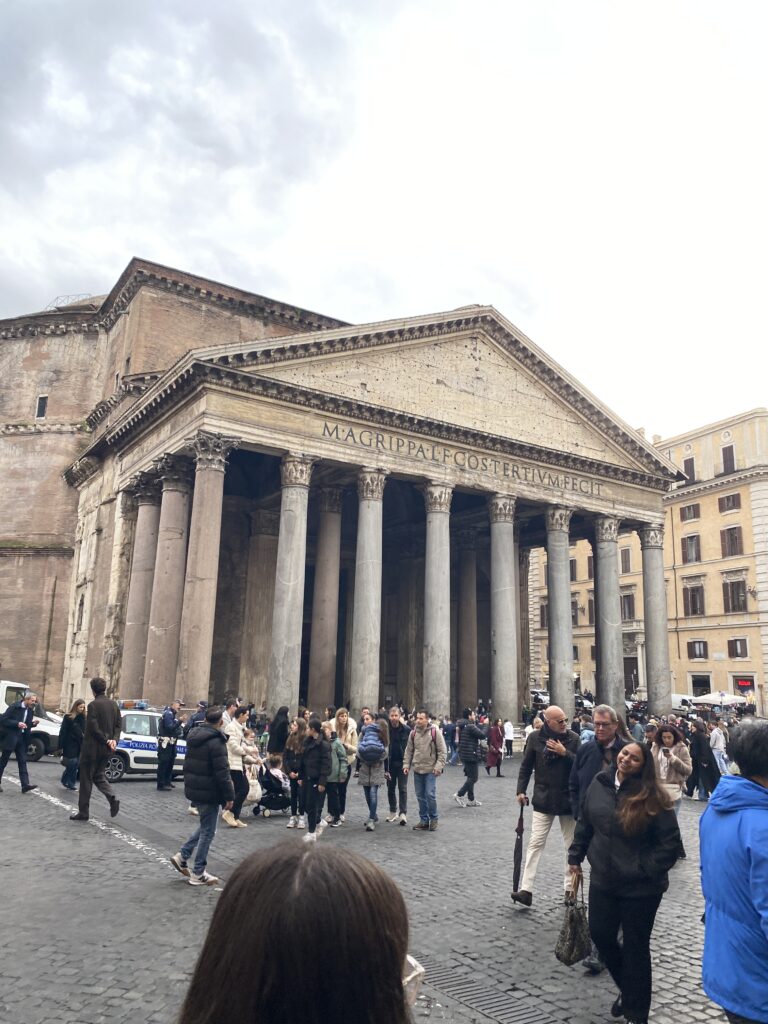
We stopped by Trevi Fountain. It was very crowded and a bit underwhelming after all that we had already seen that morning. We did take a few minutes to get some pictures, but decided it wasn’t worth our time to work our way to the front of the crowd. It’s near the Pantheon, so we walked by it. We didn’t go in on this trip.
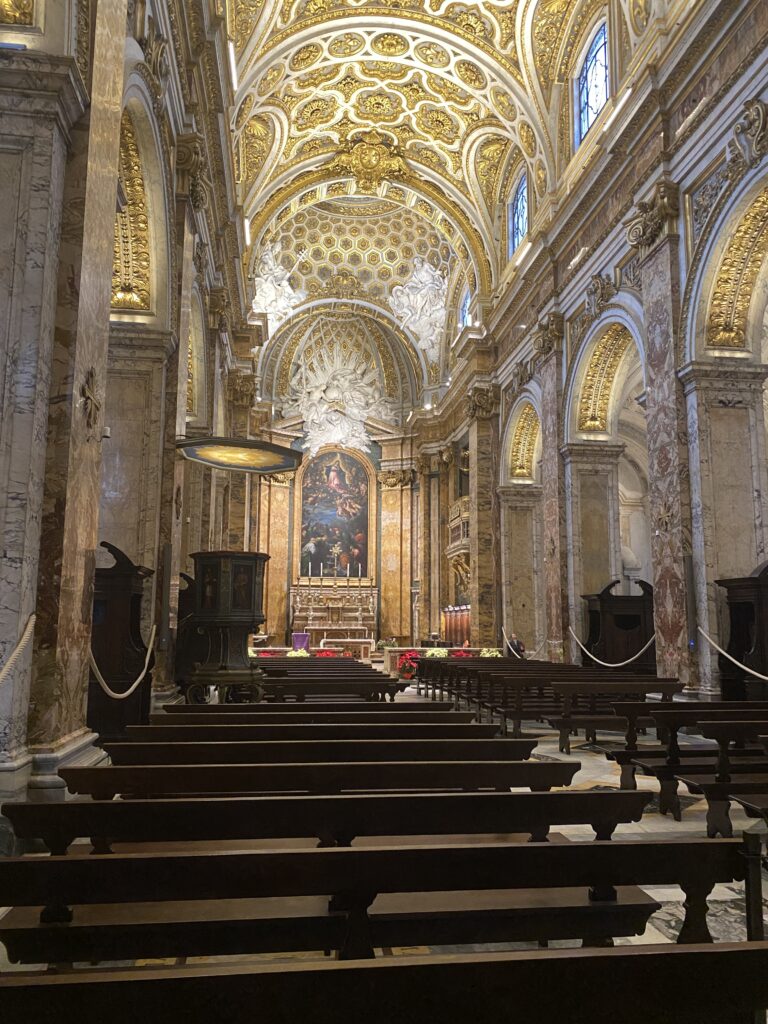
Our next stop was San Luigi dei Francesi so we could see a painting by Caravaggio. The painting is the calling of Matthew and it’s one of our priest’s favorite paintings. Jesus’ hand is the same as Adam’s in the Sistine Chapel.

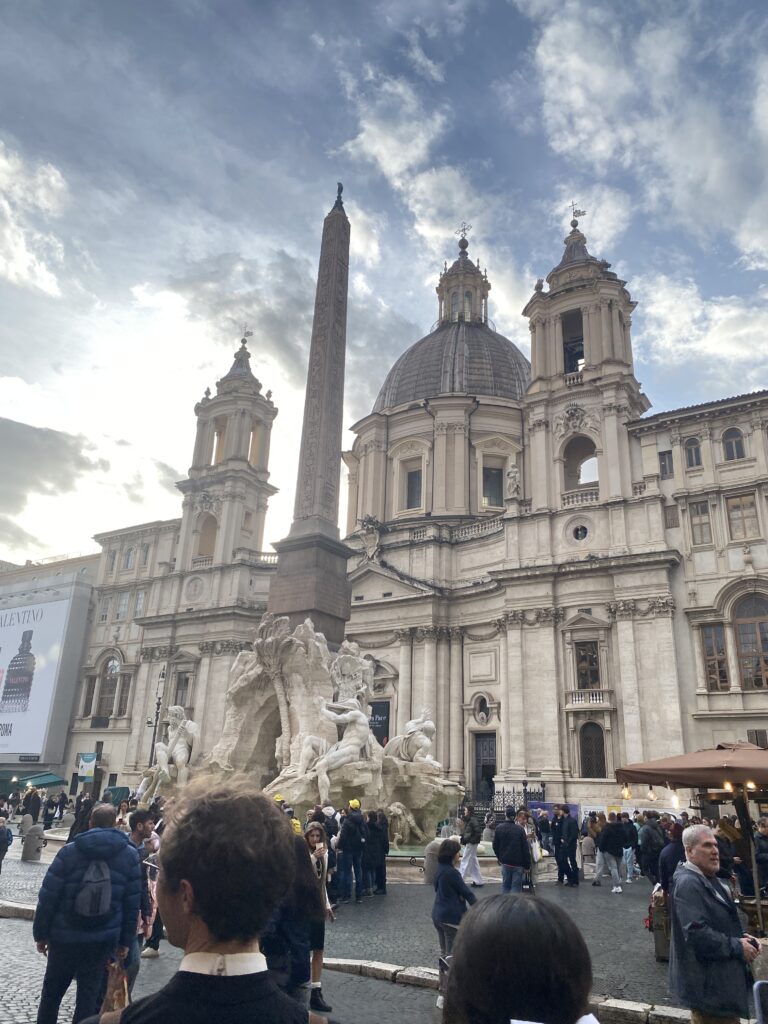
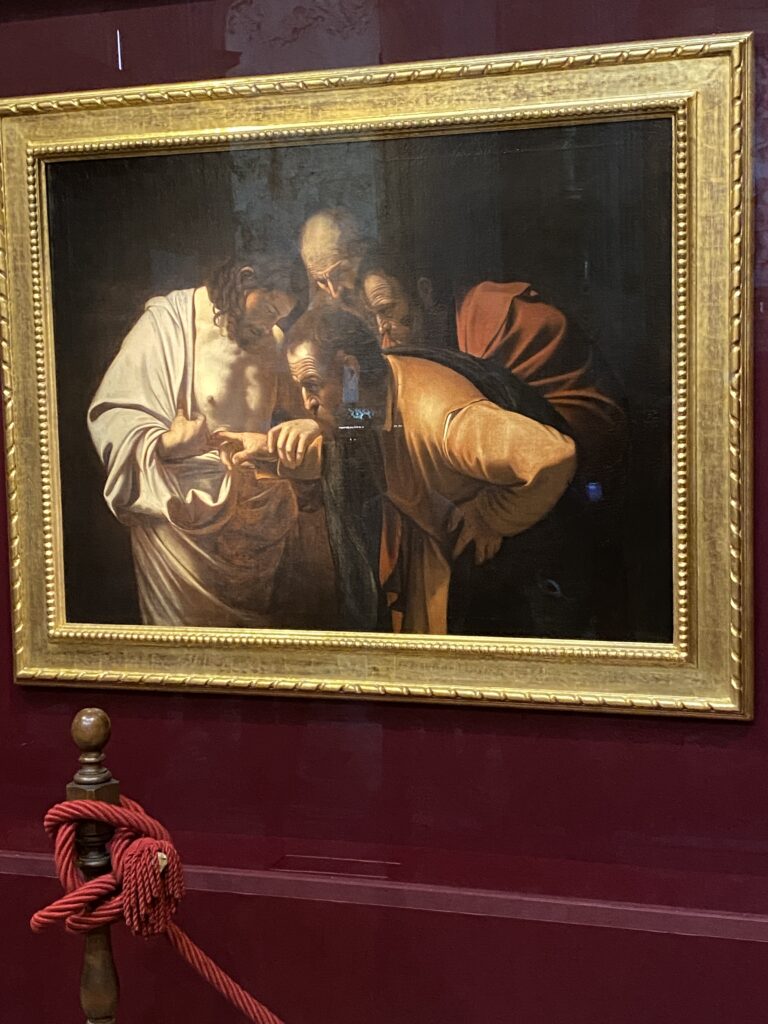
We then went to Piazza Navona to check out a small Christmas market and to stop by Sant’Agnese in Agone. The market was mainly vendors at that time of day, but it also had a carousel. The piazza has fountains and was a spot for Roman games. In Sant’Agnese in Agone, we stopped by where St. Agnes is buried. She was a young martyr who was killed at the plaza outside for being a Christian at the age of 12. We also had a surprise at that church – they had a temporary artwork display for the Jubilee Year that had a Ruben and a Caravaggio. The Ruben was of Mary and Jesus. The Caravaggio was of Doubting Thomas putting his finger in Jesus’ side.
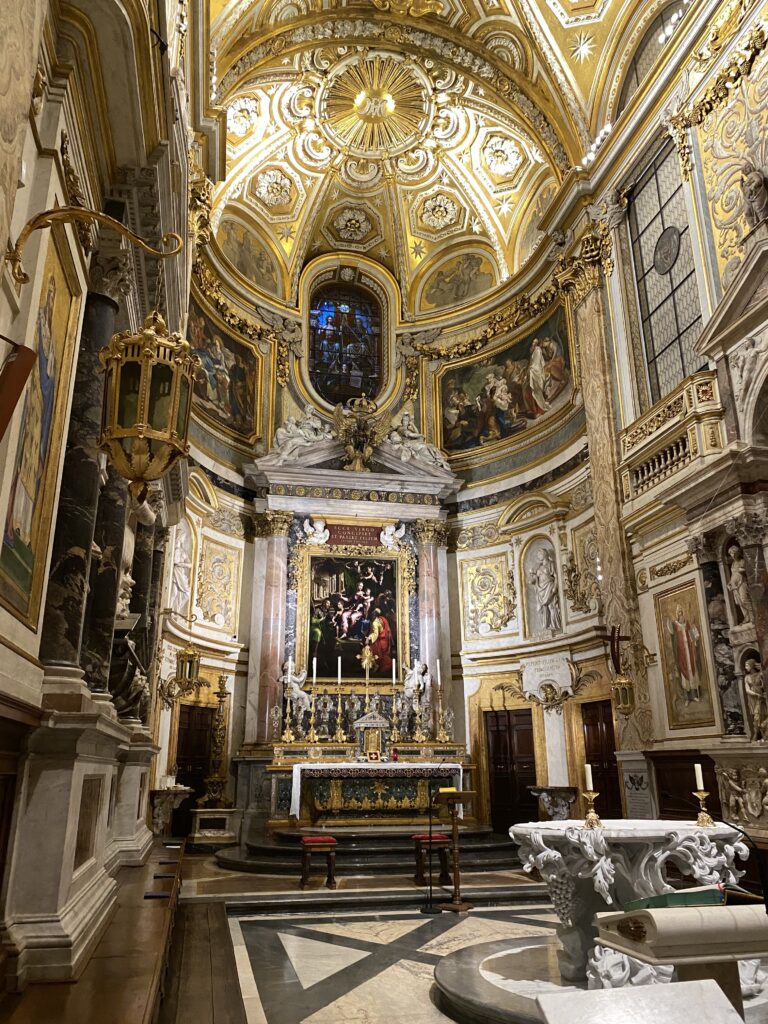
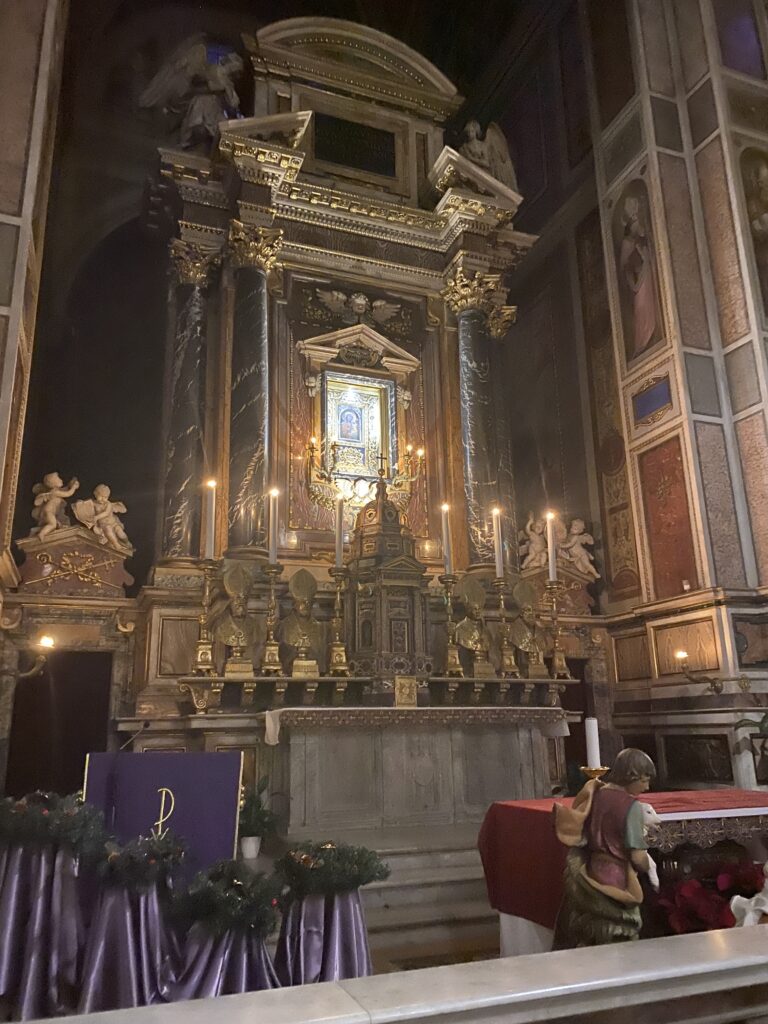
On our way to our next church, Santa Maria dell’Anima, we got some gelato at the Frigidarium. In the church, above the altar, is a beautiful painting of the holy family and angels by Raphael’s pupil, Romano.
The next church was the Basilica of Sant’Agostino in Campo Marzio. There we saw the “Madonna of the Pilgrims” painting by Caravaggio. The church is where St. Monica, St. Augustine’s mother, is buried.
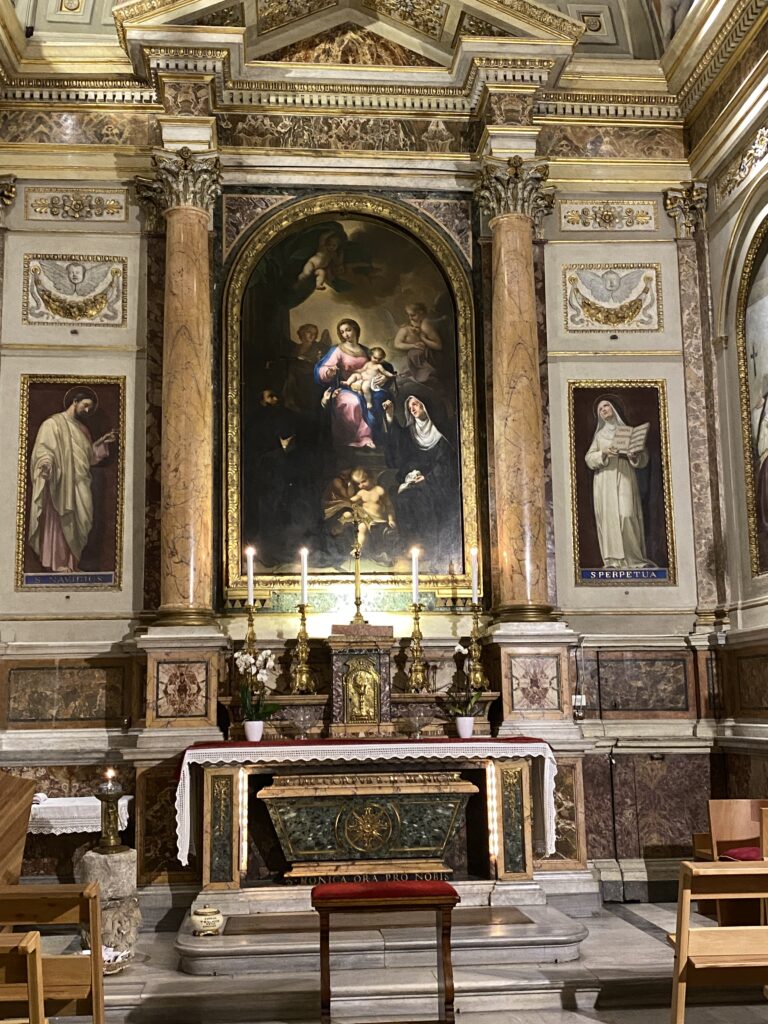
We also stopped by the Church of the Gesu, which is the first Jesuit church in Rome. The ceiling is breathtaking and it’s where St. Ignatius of Loyola is buried. He is the founder of the Jesuits.
We walked over the Tiber River and around the Jewish Quarter (which had security around it that you couldn’t pass through) to head to St. Cecilia. Unfortunately, they had closed 10 minutes early and despite pleading with a nun, they wouldn’t reopen it for us.
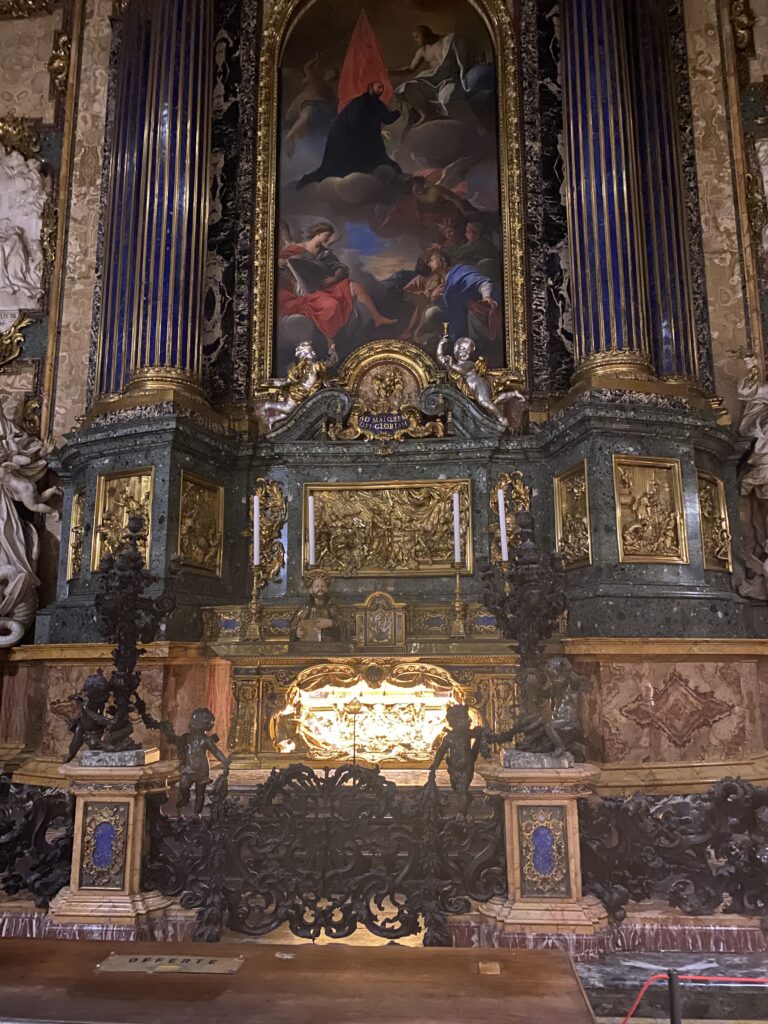
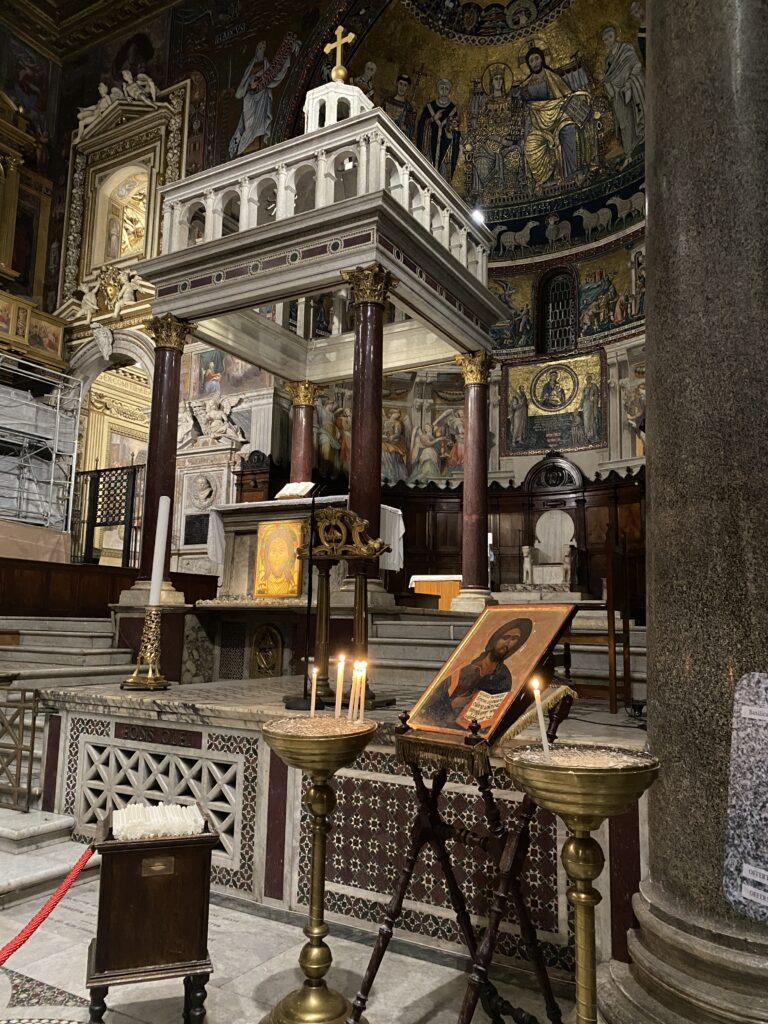
Our last church before dinner was Santa Maria in Trastavere. It was probably the first official place of worship for Christians in Rome in the 3rd century.
We ended the night with a leisurely Italian dinner and then headed back to the hotel for some rest after visiting 11 churches in one day!
Read about days 4-5 here!